
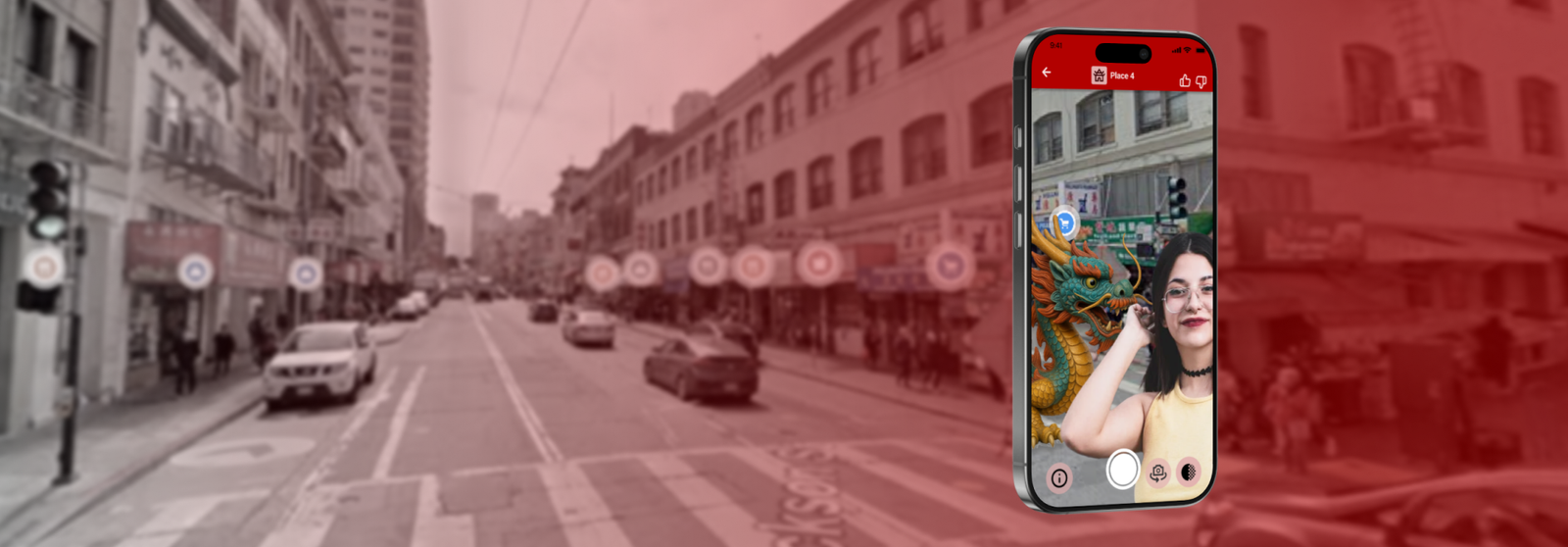
AR Cultural Heritage Tour
A mobile AR experience that reveals hidden stories of a historic neighborhood through interactive visuals, narration, and location-based content.
Overview · Problem & Goals · Research · Design Process · Solution · Results · Learnings
Project Overview
Client
International museum + cultural non-profit organization
Team
UX Designers, UI Designer, Product Owner, Scrum Master, Developers, 3D Artists.
Role / Responsibilities
UX Designer
- Competitive & contextual research (museum AR & tourism tools)
- User stories, storyboards, and user flows
- Interaction logic for geolocation + camera-based AR triggers
- Wireframes and detailed UX specifications
- Feature explanation screens + AR onboarding
- Narrative pacing and usability refinement with clients
- UX QA under real-world outdoor conditions
- Iteration based on visitor behavior & field tests
Tools
- Figma
- Asana
- Teams
- Microsoft 365
Duration
~6–8 weeks
Problem statement
Traditional neighborhood tours often lack immersion, emotional impact, and contextual depth. Visitors struggle to connect historical events with physical locations. The challenge was to design a mobile AR tour that blended physical exploration with digital storytelling — intuitive enough for tourists, rich enough for cultural institutions, and resilient to real-world constraints (GPS drift, lighting, mobility).
Goals
- Reveal history through AR overlays, narration, and interactive content
- Guide visitors naturally through physical routes
- Ensure accessibility for all age groups and tech-comfort levels
- Adapt to GPS precision limits and outdoor lighting variability
- Create a scalable model for future AR tours
- Balance educational storytelling with intuitive UX
Research insights
Methods
- Competitor research (AR tourism + museum guides)
- Survey (~100 respondents matching the museum’s typical visitor segment)
- Analysis of visitor interests and preferred tour themes
- Assessment of walking tolerance and mobility expectations
- Identification of pain points in current museum visits
- Evaluation of willingness to engage with interactive AR content outdoors
- Field testing in outdoor conditions
Key insights
- Visitors prefer short, place-anchored stories over long audio-only guides
- Visitors prefer themed routes aligned with specific cultural stories
- Most visitors are comfortable with short-to-moderate walking distances
- AR triggers must be forgiving to account for GPS drift
- Clear onboarding dramatically reduces user hesitation
- AR must complement and not overwhelm the physical environment
- Navigation clarity is essential outdoors where attention is divided
User personas
Visitors:
Tourists and local visitors interested in cultural learning, comfortable with smartphones but unfamiliar with AR. Need simple onboarding, clear directions, and engaging content that enhances real-world exploration. Constraints include mobility, varying lighting conditions, and limited attention span outdoors.
Design process
1 Discover
Analyzed visitor behaviors and gaps in traditional tours; identified opportunities for AR-enhanced storytelling.
2 Define
Established key narrative stops and structured the tour around historical milestones and meaningful locations.
3 Ideate
Developed concepts combining maps, AR reveals, audio narration, and interactive layers.
4 Design
Created wireframes, user flows, AR trigger rules, and feature explanation screens.
5 Refine
Iterated based on client reviews and outdoor QA sessions, improving clarity and pacing.
6 Reflect
Documented insights and recommendations for future AR cultural projects.
Visual journey
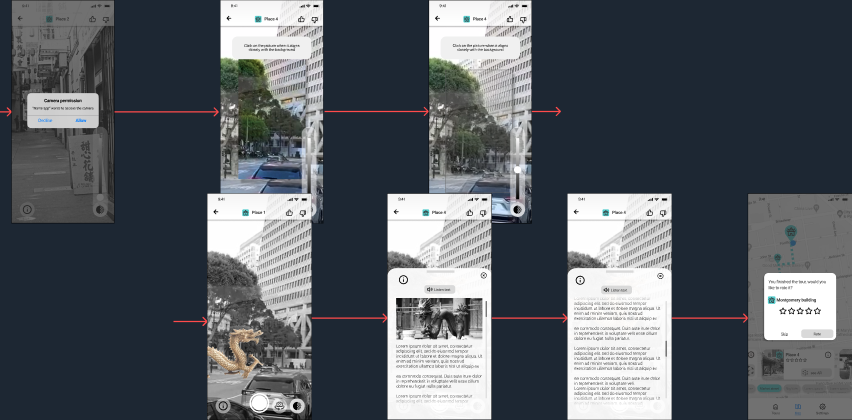
Storyboards & Route Structure
Early frames defining how visitors move between stops and how narrative unfolds in AR.
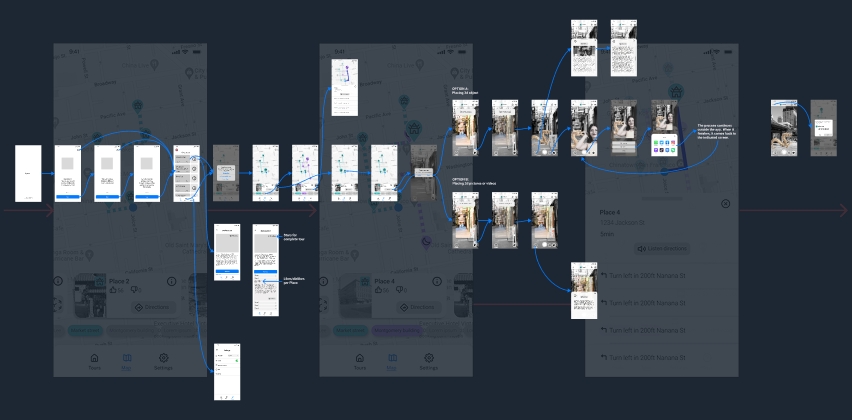
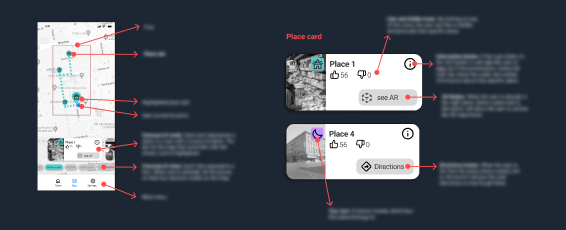
Wireframes & Userflows
Wireframes outlining points of interest (POIs), AR triggers, content layers, and navigation steps.
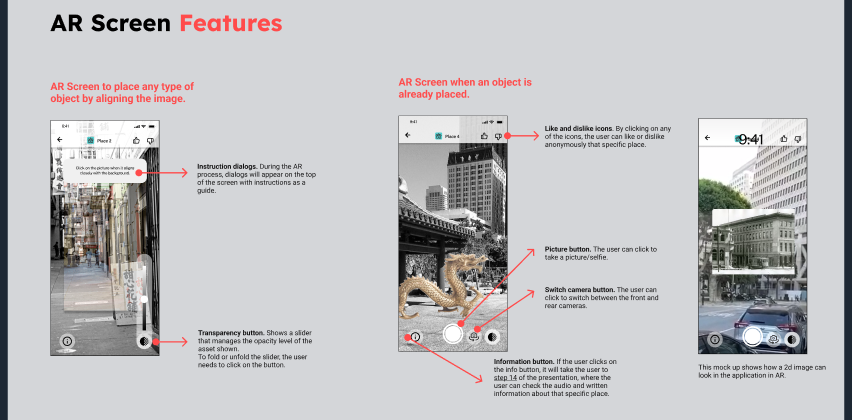
AR Feature Explanations
Screens explaining how to scan, reveal AR content, and interact with 3D visuals.
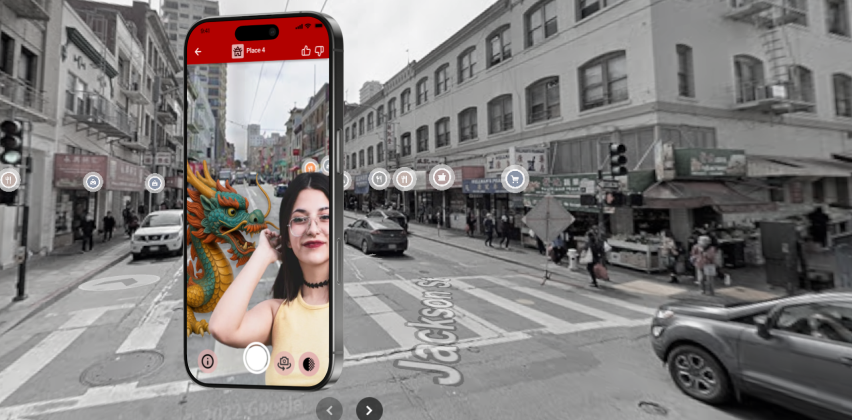
Final Demonstration Screens
Screenshots from the prototype showing AR placement.
The solution
Key features
- Location-based AR reveals
- Interactive POIs with 3D models, narration, and text
- Simple map navigation
- Clear AR onboarding
- Outdoor-friendly UI with high contrast
- Scalable structure for future tours
- Context-aware storytelling
Technical decisions
- Geolocation blending with camera-based tracking
- Forgiving AR triggers (wider bounding boxes)
- Lightweight 3D assets for mobile performance
- Daylight-friendly UI contrast
- Modular content structure for rapid updates
Results & impact
Key metrics
- Delivered a fully guided AR tour framework adaptable to multiple routes
- Successfully tested AR triggers and navigation outdoors
- Enhanced cultural storytelling with immersive digital layers
Key learnings
- Outdoor AR requires forgiving detection and robust onboarding
- Visitors respond strongly to short, meaningful narratives
- Real-world mobility must shape interaction rhythm
- Navigation clarity is essential in open environments
- AR storytelling works best when minimal and contextual
Next steps
- Add new thematic routes
- Add multi-language support
- Introduce optional deeper content layers
Confidentiality note
This case study is a reconstructed summary created under NDA. It excludes all proprietary client content, and any visuals shown are my own prototypes or placeholder examples.